Saturday, April 28, 2012

Constipation and Fiber


Constipation means having a difficult time eliminating feces from the bowel. To prevent it, it is essential to consume fiber and water on a regular basis.  Excessive use of laxatives, deficiency of exercise and in diet can cause constipation. It is recommended for women to take 25 grams of fiber while men should take 38 grams of fiber every day. In addition, when people turn 50 it is suggested to take 21 grams for women and 30 grams for men each day. People should be more knowledgeable about the two types of fiber: soluble and insoluble. Soluble fiber consists of absorbing contents in one’s body; whereas insoluble fiber is the substance that makes up our stools, easing the process through the colon (Natural Fiber Foods & Constipation). I don’t think people take heed in observing their bowel movements, unless they find a problem to it. It can be difficult to take notice of one’s bowel movements because it is not aspect of a person’s health deemed as important or significant. People are concerned with other components of their health, so constipation and its effects in the later future are probably viewed later in life today because that is when the effects are going to be more visible.

http://www.livestrong.com/article/82403-natural-fiber-foods-constipation/

Thursday, April 19, 2012

Voice Box: Keep it Safe


We learned about the respiratory system and there were a few key ideas that grasped my interest. The larynx is the voice box, which contains the glottis that is comprised of vocal cords. Vocal cords vibrate, and it enables the larynx to produce a pitch. As we age, our voice becomes hoarse, but I was interested to find out ways we can delay the process. There are a few techniques that stood out to me. For example, I discovered that consistently drinking fluid helps with maintain the vocal cords intact. Hydration of the body enables fluid to be lubricated by substances that are similar to saliva. Another way we can avoid having a greater damage in our voice as we age is to avoid shouting. Shouting makes the larynx work harder to produce speech due to its intensified tone of voice. Professionals, such as teachers, city traders, and telephone workers are more susceptible to exacerbating their voices (The Aging Voice). It is important to avoid raising one’s voice because it can agitate the vocal cords, causing the larynx to put more effort to work appropriately.

We take advantage of our voices many times. Although we are fortunate to have them, we must take heed of how do we apply our voices in our daily lives because, as many other bodily functions, our voices will deteriorate overtime. 


Sunday, April 15, 2012

Alzheimer's Disease


Amongst the many topics we learned in class, Alzheimer’s disease is one in which that is prevalent in the aging population. We learned about the cell biology of the disease, which contributes to neurons dying due to the formation of neurotic plaques and neurofibrilliary tangles. The neurons that are affected are acetylcholine-releasing neurons.

Researchers have not found a cure for Alzheimer’s, but there are treatments involved with acetylcholinesterase, the enzyme that prevents the activation of ACh. These treatments lessen the symptoms of the disease. Inhibiting acetylcholinesterase hampers the breakdown of the enzyme, which compensates for the reduction of the enzyme in the disease (IA5. Clinical Application: Acetylcholine and Alzheimer's Disease).

I think Alzheimer’s disease is highly complex to muster up a method to terminate the disease. However, treatments that focus on reducing the enzyme that prevents the launching of ACh is a good step in lessening the symptoms. I think the disease might lessen if the enzyme is inhibited because it was one of the ways that causes the disease.


http://web.williams.edu/imput/synapse/pages/IA5.html

Sunday, April 1, 2012

Hypertension and Eye


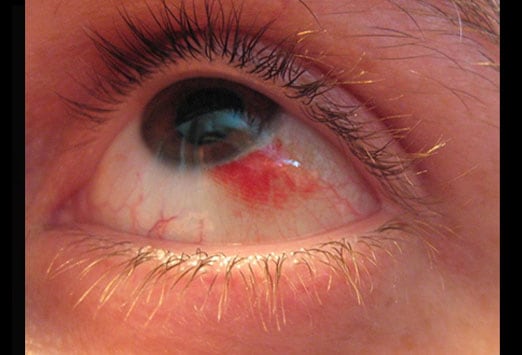
Last week in class I learned about hypertension, or high blood pressure.  High blood pressure is when it increases the work the heart has to do to pump blood to all areas of the human body. Due to the heart’s workload, it can cause heart attacks, strokes, kidney dysfunctions, and many other life-threatening circumstances. Amongst the many other unhealthy conditions, there is vision problems and blindness. Changes in vision can occur because pressure in the blood vessels can cause them to rupture or bleed. In addition, the optic nerve (the nerve that sends impulses to nerve tracts) may end up swelling. Hypertension can harm the retinal blood vessels that provide for the eye.  When this happens, it is called hypertensive retinopathy.  The blood vessels turn stiff due to the massive pressure, causing them rupture and overflow the retina with blood (Retinopathy - forms, symptoms and treatment). You may have symptoms of headaches, blurry vision, and a few others.  I found this interesting because I have always thought of high blood pressure only directing affecting the heart since the heart is major organ that is involved with hypertension. Reading more about this harmful condition helped me to remember that blood vessels encompass our entire body and we must take heed of what we do to one part of the body because more than likely it can affect another area of our bodies.


http://www.beltina.org/health-dictionary/retinopathy-forms-diabetes-symptoms-treatment.html

Sunday, March 25, 2012

The Sweet Tooth


Senses are vital components of human beings that can affect their quality of life. One of the senses that we took a closer look at is the sense of taste. We have countless taste buds that decrease and become less active as we age. Food begins to lose its taste, and the elderly do not have a motivation to eat as much as they regularly did before. However, I discovered that many older people, especially people over 70 years old, have an excessive longing for sweets (“The Senior Sweet Tooth: Why Do So Many Seniors Crave Sweets?”). “Sweet” is the first taste bud humans are exposed to as newborns, so caregivers believe that the elderly’s excessive longing for sweets is plausible. In addition, “sweet” is the taste bud that the elderly have enjoyed for the longest time. I think this piece of information is intriguing, on account that I have witnessed elderly prefer sweets over other variety of foods. I have visited and interned at the nursing home from back home, and many times, patients and clients would want dessert or sugar with their meals. It is probable that their “sweet” taste bud is the one that is most active, but I am not sure if that is the case. Also, I am skeptical if the level of activity in the taste buds are affected by excessive exposure to foods that tap into those taste buds. In other words, as a 20 year-old who usually consumes sweets, would my “sweet” taste bud decrease, while the other taste buds I don’t use often would increase with age?
Hope you liked this food for thought!

http://www.eldercareteam.com/public/397.cfm

Sunday, March 18, 2012

What You Didn't Know About Muscle Cramps...


I learned about muscle cramps. Muscle cramps occur often, especially to the elderly population. The elderly are more vulnerable to muscle cramps because of atrophy (OrthoInfo). Muscle loses its strength, so it is more difficult for people to be as active as they were before. A few factors can cause cramps, such as insufficient circulation of blood, inadequate blood levels of sugar, sodium, and calcium, and a few other factors. Exercising in sweltering weather can contribute to muscle cramps because sweat uses up bodily essentials, as mentioned above. Muscle cramps are benign, but if occurred frequently, it might be due to metabolism, nutrition, and a variety of other reasons. Above all, you should always consider consulting a doctor. People can alleviate muscle cramps by resting and stretching muscles before they use their muscles for action. Several people suggest stretching three times a day while others recommend stretching before heading to bed (Muscle Cramps). In addition, placing a pillow to have the foot raised while sleeping is recommendable for people who have muscle cramps.
I never thought that exercising in hot weather plays as an important factor in getting cramps. Learning this helps me to be aware of the amount of water I drink and the length of time I would be outside jogging. All of us need to take heed of our own actions because they can determine our health state later that day. Although it is tempting to jog everyday when the sun is at its highest, it is crucial to maintain your health and avoid getting cramps. It is unlikely to live life without muscle cramps, but you can minimize the frequency of them.


Sunday, March 11, 2012

PET Scans and Increasing Dopamine


In class, I learned that Parkinson’s disease is a brain disorder that leads to tremors, difficulty in movement, coordination, and numerous other affects in bodily functions. Dopamine, a neurotransmitter, becomes less active. Dopamine is involved with muscle control. Due to this, Parkinson’s disease is likely to occur because there is loss of neurons that produce dopamine.  I was wondering if increasing dopamine in the nervous system can prevent the disease, but it was difficult to find information on this matter. However, I did find that there is no scientific advancement at this moment to avert Parkinson’s disease. Researchers are currently examining any common abnormality that all diagnosed people have to determine people who are apt in obtaining Parkinson’s disease. In the meantime, there are technological advances that have an impact on the understanding of the disease. For example, Positron Emission Tomography (PET) scans the brain to identify visuals of chemical changes as they take place (National Institute of Neurological Disorders and Stroke). The PET provides a way to examine dopamine receptors to observe if the failure of dopamine activity comes before or after the deterioration of neurons that create dopamine.
 I think this scrutiny is very much needed because it sounds more like “chicken or egg” situation. Do the neurons that produce dopamine causes loss of dopamine or does dopamine level drop before the neurons fail? For this reason, I was interested to explore the significance of dopamine and its effect, in terms of Parkinson’s disease.


 I also found that increasing antioxidant intake can be a safeguard for neurons that produce dopamine, so they are less prone to be affected by free radicals. On the other hand, foods that are high in fat and cholesterol can cause dopamine level to be low (Integrative Psychiatry). I think maintaining a good amount of dopamine as we age might avert the likelihood of Parkinson’s disease. Given that dopamine levels are reduced by stress, some antidepressants, bad nutrition, and a few other factors, it might be highly necessary to maintain a feasible amount of dopamine to age well.
http://www.ninds.nih.gov/disorders/parkinsons_disease/detail_parkinsons_disease.htm
http://www.integrativepsychiatry.net/dopamine.html